
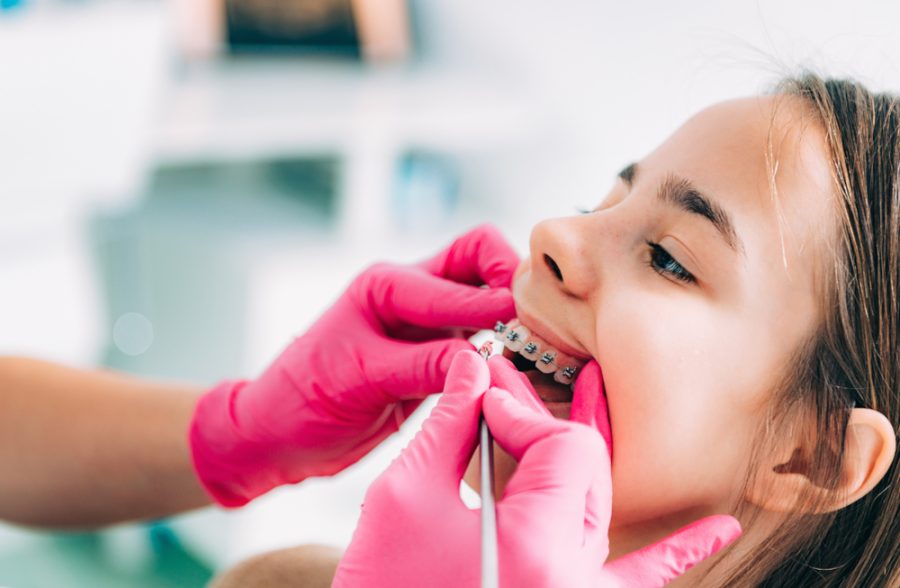
Many parents notice small changes in their child’s teeth and begin wondering the same question: Does my child actually need braces right now, or can it wait?
It’s a very common concern. Children’s teeth go through many stages as they grow, and not every crooked tooth means immediate orthodontic treatment is necessary.
Some alignment issues naturally improve as children lose baby teeth and adult teeth come in. Other problems, however, may benefit from early orthodontic guidance.
Understanding the difference between normal development and signs that orthodontic treatment may be needed can help parents make confident decisions about their child’s dental health.
We’ll explain how children’s teeth develop, what signs may indicate your child needs braces, and when orthodontists recommend evaluation or treatment.
When Should a Child First See an Orthodontist?
Many parents assume orthodontic treatment begins during the teenage years. While this is often true, orthodontists usually recommend that children have their first orthodontic evaluation earlier.
The American Association of Orthodontists recommends that children see an orthodontist around age 7.
This does not mean your child will necessarily need braces at that age. Instead, the visit allows the orthodontist to monitor how the teeth and jaws are developing.
Early evaluations help identify potential issues before they become more complicated.
Why Age 7 Is an Important Time for Evaluation
By age 7, most children have a mix of baby teeth and permanent teeth. This stage gives orthodontists valuable insight into how the bite and jaw are developing.
At this age, orthodontists can identify:
- Crowding or spacing problems
- Bite issues such as overbite or underbite
- Jaw growth concerns
- Early signs of alignment problems
Even if treatment is not needed immediately, early monitoring helps ensure problems are addressed at the right time.
Signs Your Child May Need Braces
Parents often notice small clues that something may not be developing normally with their child’s teeth.
Some common signs that orthodontic treatment may eventually be needed include:
Crooked or Crowded Teeth
If your child’s teeth overlap, twist, or appear crowded, there may not be enough space for all the teeth to align properly.
Early or Late Loss of Baby Teeth
If baby teeth fall out very early or remain too long, it can affect how permanent teeth come in.
Difficulty Chewing or Biting
Children who struggle to chew food comfortably may have bite alignment issues.
Mouth Breathing
Consistent mouth breathing can sometimes affect jaw development and tooth positioning.
Thumb Sucking or Prolonged Pacifier Use
Habits such as thumb sucking beyond early childhood may influence how the teeth and jaws develop.
Jaw Shifting or Clicking
If the jaw shifts when opening or closing the mouth, it may indicate bite misalignment.
Common Bite Problems in Children
Orthodontists evaluate how the upper and lower teeth fit together. When the bite is not aligned correctly, it can affect both function and appearance.
Overbite
An overbite occurs when the upper teeth overlap the lower teeth excessively.
Underbite
An underbite happens when the lower teeth extend past the upper teeth.
Crossbite
With a crossbite, some upper teeth sit inside the lower teeth instead of outside.
Open Bite
An open bite occurs when the front teeth do not touch when the mouth closes.
Each of these conditions can vary in severity and may require orthodontic correction.
When It Might Be Okay to Wait
Not every child needs braces right away. In many cases, orthodontists recommend monitoring development rather than beginning immediate treatment.
Situations where waiting may be appropriate include:
- Minor crowding that may resolve as more adult teeth erupt
- Spacing that may close naturally over time
- Teeth still transitioning from baby to permanent teeth
- No functional bite issues
In these cases, the orthodontist may recommend periodic checkups to track development.
What Is Phase One Orthodontic Treatment?
Sometimes early intervention is recommended. This is often called Phase One orthodontic treatment.
Phase One treatment focuses on guiding jaw growth and creating enough space for incoming permanent teeth.
This may involve:
- Palatal expanders
- Limited braces
- Space maintainers
- Growth guidance appliances
Phase One treatment can make later orthodontic treatment easier and sometimes shorter.
When Full Braces Are Usually Recommended
Most comprehensive orthodontic treatment begins between the ages of 11 and 14.
By this time, most permanent teeth have erupted, making it easier to move them into proper alignment.
During this stage, orthodontists often use:
- Traditional braces
- Clear braces
- Invisalign for teens
The exact timing depends on each child’s unique development.
Benefits of Orthodontic Treatment for Children
Orthodontic treatment does more than improve the appearance of a smile. It also supports long-term oral health.
Properly aligned teeth help:
- Improve chewing and bite function
- Reduce the risk of tooth wear
- Make brushing and flossing easier
- Lower the risk of gum disease
- Improve confidence and self-esteem
For many children, orthodontic treatment can have lasting benefits that extend into adulthood.
Why Early Evaluation Gives Parents Peace of Mind
One of the biggest benefits of an early orthodontic evaluation is clarity.
Instead of guessing whether your child needs braces, an orthodontist can assess their development and provide guidance.
In many cases, parents leave the appointment relieved to learn that treatment can wait. In other situations, early care may prevent more complex problems later.
Either way, early evaluation helps ensure your child’s smile develops in the healthiest way possible.
How we can help
At My LA Braces, we provide expert orthodontic care for kids, teens, and adults throughout Montebello and East Los Angeles. As the highest ranked orthodontic office in East Los Angeles, our team is dedicated to helping families understand their orthodontic options and guiding children toward healthy smiles.
We offer personalized orthodontic evaluations and treatment plans using braces and Invisalign, carefully designed to match each child’s growth and development.
If you’re unsure whether your child needs braces now or later, our experienced orthodontic team can evaluate their teeth, answer your questions, and recommend the best next steps.
Schedule a consultation with My LA Braces today and let us help your child achieve a healthy, confident smile that lasts a lifetime.