
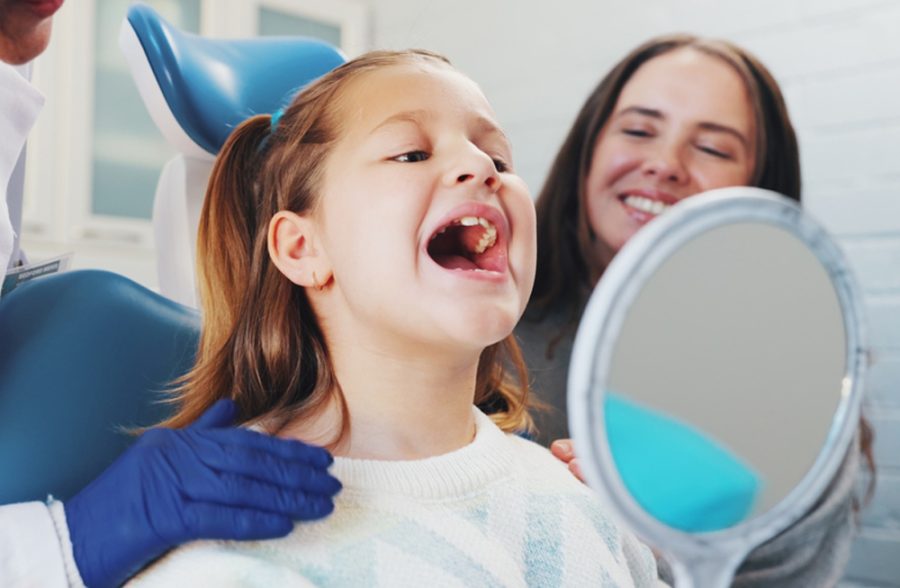
Seven can feel surprisingly young for an orthodontic appointment. Your child may still have plenty of baby teeth, their smile is still changing, and braces might seem like something to think about years from now. So when a dentist, another parent, or an orthodontist suggests having your 7-year-old evaluated, it is understandable to wonder: Are we really at that stage already?
The answer is yes—it is a good age for an orthodontic evaluation. But an evaluation at age 7 does not mean your child automatically needs braces at age 7. In fact, many children who visit an orthodontist at this age do not need immediate treatment. The purpose of an early visit is often to understand how the permanent teeth and jaws are developing and determine whether anything should simply be monitored or addressed earlier.
The American Association of Orthodontists recommends that children have their first orthodontic check-up no later than age 7. At this age, children usually have a combination of baby teeth and permanent teeth, giving an orthodontist an opportunity to evaluate developing bite and alignment concerns while the mouth is still growing.
Why Is Age 7 Such an Important Time?
Around age 6 or 7, children typically enter what dental professionals call the mixed-dentition stage. This simply means that baby teeth and permanent teeth are present at the same time. The American Academy of Pediatric Dentistry describes mixed dentition as generally occurring from approximately ages 6 through 13.
By age 7, several permanent teeth may have erupted, while many others are still developing underneath the gums. An orthodontist can evaluate how the upper and lower jaws relate to each other, whether permanent teeth appear to have enough room to emerge, and whether the child’s bite is developing as expected.
This timing gives the orthodontist something very valuable: a look at the smile while development is still happening. Rather than waiting until nearly every permanent tooth has erupted, the orthodontist can identify certain problems earlier and decide whether monitoring or treatment makes the most sense.
Seeing an Orthodontist at 7 Does Not Mean Getting Braces at 7
This is one of the most important distinctions for parents to understand. An orthodontic evaluation and orthodontic treatment are not the same thing.
Your child’s first appointment may end with the orthodontist saying that everything looks good and recommending another evaluation in six months, a year, or at another appropriate interval. Monitoring allows the orthodontist to watch permanent teeth erupt and see how the jaws and bite change as your child grows.
For some children, waiting is exactly the right approach. For others, an orthodontist may identify a specific issue that could benefit from earlier attention.
The goal is not to put every 7-year-old into braces. The goal is to determine the right timing for your individual child.
What Is an Orthodontist Looking for at Age 7?
Parents often look at their child’s smile and focus primarily on whether the front teeth appear straight. Orthodontists evaluate much more than appearance.
During an early orthodontic evaluation, the orthodontist may assess:
- How the upper and lower teeth fit together when your child bites.
- Whether there appears to be enough room for developing permanent teeth.
- Significant crowding or spacing.
- Crossbites, where certain upper teeth bite inside the lower teeth.
- Underbites, where the lower teeth or jaw sit ahead of the upper teeth.
- Excessive overbite or other bite relationships.
- Permanent teeth that may be erupting in unusual positions.
- Early or delayed loss of baby teeth.
- Jaw growth and facial development.
- Oral habits that may affect tooth or jaw development.
Some of these issues can be difficult for a parent to recognize at home. A child’s teeth may even look relatively straight from the front while a bite problem or developing eruption issue exists elsewhere in the mouth.
What Is Early Orthodontic Treatment?
When treatment is recommended before most permanent teeth have erupted, it is often called early or interceptive orthodontic treatment. You may also hear it described as Phase 1 treatment.
Early treatment is not necessary for every child. When it is recommended, it generally focuses on a particular developing orthodontic issue rather than trying to create the child’s final adult smile immediately.
Depending on the child’s needs, an orthodontist may use an orthodontic appliance, limited braces, an expander, space-management techniques, or another approach. The exact treatment depends entirely on the child’s teeth, jaws, growth, and diagnosis.
Some children who receive early orthodontic care may still need comprehensive braces or clear aligner treatment later after more permanent teeth have erupted. Early treatment should therefore be viewed as one stage of a larger orthodontic plan when it is appropriate—not as a guarantee that future treatment will never be needed.
What If My Child’s Teeth Look Fine?
You can still schedule an orthodontic evaluation. The purpose of an age-7 visit is not limited to children with obviously crooked teeth.
Orthodontists are trained to evaluate the relationship between teeth, jaws, and facial growth. Some developing orthodontic concerns are much easier to identify professionally than they are by simply looking at a child’s smile in the mirror.
If no treatment is necessary, that is useful information too. You can leave the appointment knowing that your child’s development has been professionally evaluated and that you have a plan for when the orthodontist should take another look.
Signs Your Child May Need an Earlier Orthodontic Evaluation
Age 7 is a useful benchmark, but parents do not have to wait for a specific birthday if they notice something concerning. The AAO recommends an orthodontic check-up when a developing orthodontic problem is recognized and no later than age 7.
Consider asking a dentist or orthodontist about an evaluation if you notice concerns such as difficulty biting or chewing, teeth that do not meet normally, significant crowding, a noticeably protruding jaw, or permanent teeth emerging in unexpected locations.
Early or late loss of baby teeth may also be worth discussing. Every child’s developmental timeline is different, so something that looks unusual does not automatically mean there is a serious orthodontic problem. An evaluation is the best way to determine what is actually happening.
What Happens During a 7-Year-Old’s Orthodontic Visit?
A first orthodontic visit should be much less intimidating than many children imagine. The primary purpose is evaluation and planning.
The orthodontist will generally look at your child’s teeth, bite, and jaw relationships. Depending on the circumstances, additional diagnostic records may be recommended. The orthodontist can then explain whether treatment is needed now, whether your child should be monitored as they grow, or whether there are no significant concerns at the moment.
Parents should feel comfortable asking questions. If treatment is recommended, ask what problem is being addressed, why the orthodontist recommends treating it now, what the treatment involves, and whether waiting would change the situation.
Why Monitoring Can Be Just as Valuable as Treatment
Sometimes the best orthodontic plan for a 7-year-old is simply observation.
Children’s mouths change quickly. Baby teeth fall out, permanent teeth erupt, jaws grow, and spaces can open or close. Periodic orthodontic evaluations allow an orthodontist to watch those changes and recommend treatment when the timing is appropriate.
This approach can also give parents more time to understand potential future treatment rather than suddenly discovering a significant orthodontic issue during the teenage years.
Think of an early orthodontic evaluation less like starting braces and more like checking the roadmap. The orthodontist is assessing where your child’s smile is today, where development appears to be heading, and whether anything deserves closer attention along the way.
Does My Child Still Need Regular Dental Visits?
Absolutely. An orthodontist and a general or pediatric dentist have different roles in your child’s oral healthcare.
Regular dental care remains important for cavity prevention, cleanings, gum health, and overall dental monitoring. Orthodontists focus specifically on the development and alignment of the teeth and jaws and how the bite functions.
Keeping both dental and orthodontic care coordinated creates a stronger foundation for your child’s long-term oral health. Families can also find broader health and family resources through the official State of California website.
What About Invisalign for Younger Children?
Parents sometimes assume orthodontics for children always means metal braces. Depending on the child’s age, development, diagnosis, and ability to follow treatment instructions, different orthodontic options may be available.
My LA Braces provides both braces and Invisalign treatment, but the right option depends on the specific orthodontic problem being addressed. At age 7, the most important first step is not choosing between braces and aligners. It is finding out whether treatment is necessary at all.
Once an orthodontist understands your child’s bite and dental development, you can discuss which treatment options are appropriate and why.
So, Is 7 Too Young for an Orthodontist?
No. Age 7 is actually an ideal time for an initial orthodontic evaluation, and it is the age by which the American Association of Orthodontists recommends children receive their first orthodontic check-up.
That does not mean your 7-year-old is automatically ready for a mouth full of braces. For many children, the appointment simply establishes a baseline and gives the orthodontist an opportunity to monitor growth and tooth eruption over the next several years.
When an orthodontic problem does need earlier attention, identifying it at the right time can give families more treatment options and a clearer plan for the future.
How we can help
If your child is approaching age 7 or has already celebrated that birthday, My LA Braces can help you understand what is happening with their developing smile. Our Montebello orthodontic office serves children, teens, and adults throughout East Los Angeles with personalized orthodontic care, including braces and Invisalign. We do not believe that an early evaluation automatically means early treatment. Our goal is to evaluate your child’s teeth and bite, explain what we see in clear language, and help you understand whether treatment is recommended now or whether monitoring is the better choice. Starting with the right information can make future orthodontic decisions much easier for both parents and children.