
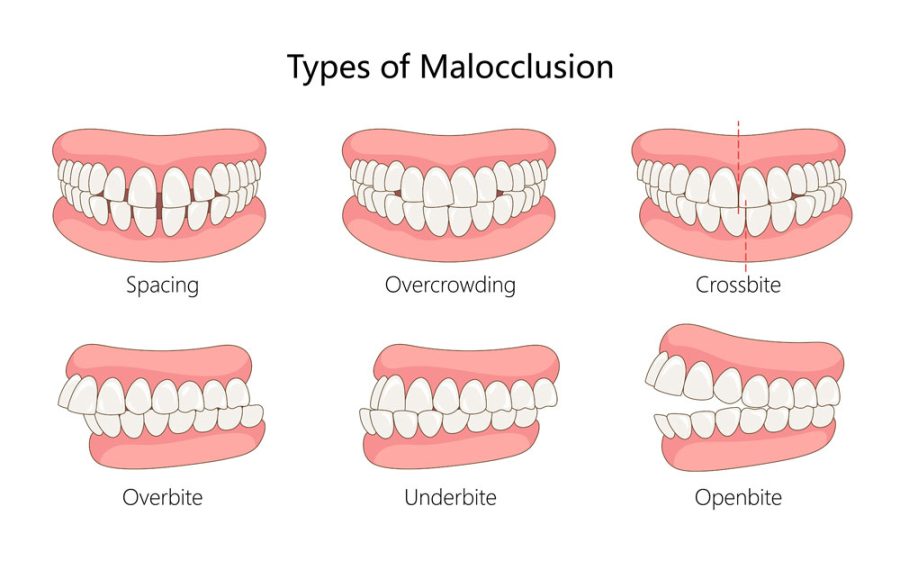
Your teeth are designed to work together as a coordinated system. When you bite down, the upper and lower teeth should meet in a position that allows you to chew comfortably, speak clearly, and distribute pressure across the teeth and jaws. When that relationship is disrupted, orthodontists refer to the problem as a malocclusion, or an improper bite.
Three of the most common bite concerns are overbites, underbites, and crossbites. They can look similar to someone who simply notices that their teeth do not line up correctly, but each condition describes a different relationship between the upper and lower teeth. The treatment can also vary considerably depending on the type of bite problem, its severity, the patient's age, jaw development, and whether the issue involves the teeth, the jawbones, or both.
At My LA Braces in Montebello, CA, we provide orthodontic treatment for children, teenagers, and adults throughout East Los Angeles. Understanding the difference between these bite conditions can help patients recognize why an orthodontic evaluation may be important and what treatment options, including traditional braces and Invisalign, may be available.
What Is a Normal Bite?
A healthy bite does not necessarily mean every person's teeth must look exactly the same. There is a natural amount of variation between patients. Generally, however, the upper front teeth should sit slightly in front of the lower front teeth when the mouth is closed. The back teeth should also fit together in a relatively balanced and functional relationship.
Orthodontists evaluate much more than whether teeth appear straight from the front. They look at how the upper and lower dental arches fit together, the position of individual teeth, jaw alignment, facial proportions, spacing, crowding, and how the bite functions during chewing.
A bite problem can therefore exist even when someone's smile appears relatively straight. Similarly, crooked teeth may be present without a major jaw alignment problem. A complete orthodontic examination helps determine exactly what type of treatment is appropriate.
What Is an Overbite?
An overbite occurs when the upper front teeth overlap the lower front teeth vertically more than they ideally should. A small amount of vertical overlap is normal. The concern arises when the overlap becomes excessive.
In a more pronounced overbite, the upper front teeth may cover a significant portion of the lower front teeth when the patient bites down. In severe cases, the lower teeth can come into contact with the tissue behind the upper teeth, or the upper front teeth may appear especially prominent in relation to the lower teeth.
People sometimes use the terms "overbite" and "overjet" interchangeably, but they describe different measurements. Overbite refers primarily to vertical overlap. Overjet refers to the horizontal distance between the upper and lower front teeth. A patient can have an excessive overbite, excessive overjet, or both.
What Causes an Overbite?
Overbites can develop for several reasons. Some are related to inherited jaw structure, while others can be influenced by tooth position, oral habits, or the way the jaws develop during childhood.
Potential contributing factors can include:
- Genetic differences in jaw size or shape
- A lower jaw that develops differently in relation to the upper jaw
- Crowding or unusual tooth positions
- Prolonged thumb or finger sucking during childhood
- Long-term pacifier use
- Certain tongue habits
- Changes caused by missing teeth
- Wear or shifting of the teeth over time
Because multiple factors may contribute to the same visible bite pattern, an orthodontic diagnosis is important before deciding how the bite should be corrected.
Can an Overbite Cause Problems?
Not every overbite causes significant symptoms, but a more severe overbite can sometimes contribute to excessive tooth wear, gum irritation, difficulty biting certain foods, jaw discomfort, or cosmetic concerns.
When the teeth contact each other improperly, certain teeth may receive more force than others. Over time, that imbalance can potentially contribute to uneven wear. An orthodontist evaluates both appearance and function when determining whether treatment is recommended.
How Is an Overbite Fixed?
Orthodontic treatment for an overbite depends on its cause. If the problem is primarily related to the position of the teeth, braces or clear aligners such as Invisalign may be used to move the teeth into a better relationship.
Traditional braces provide orthodontists with precise control over tooth movement. Brackets are attached to the teeth and connected by orthodontic wires that gradually guide the teeth into new positions.
Invisalign uses a customized series of removable clear aligners. Each set of aligners applies carefully planned pressure to specific teeth. For suitable cases, Invisalign can address both tooth alignment and certain bite problems.
Children and teenagers who are still growing may sometimes benefit from orthodontic appliances designed to influence jaw development or guide the relationship between the upper and lower jaws. Timing can be particularly important in these cases because orthodontists may be able to work with a patient's natural growth.
Severe skeletal bite problems in adults may require a different approach. Some patients can be treated orthodontically alone, while significant jaw discrepancies may require coordination with other dental or surgical specialists. The appropriate option can only be determined after an examination and diagnostic evaluation.
What Is an Underbite?
An underbite is essentially the opposite front-to-back relationship. Instead of the upper front teeth sitting slightly ahead of the lower front teeth, the lower front teeth extend in front of the upper front teeth when the patient bites down.
An underbite may involve only a few teeth, or it may reflect a broader relationship between the upper and lower jaws.
Some underbites are relatively mild and primarily dental, meaning the teeth themselves are positioned in a way that creates the reverse bite. Other cases are skeletal, meaning the lower jaw may be relatively prominent, the upper jaw may be relatively small or positioned farther back, or both jaws may contribute to the problem.
What Causes an Underbite?
Genetics often play an important role in underbites because jaw size and facial structure can run in families. Childhood habits and tooth eruption patterns can also influence how the bite develops.
An orthodontist must determine whether the underbite originates primarily from the teeth or the jaw structure. That distinction can significantly affect treatment planning.
Why Can an Underbite Need Treatment?
A noticeable underbite can affect more than the appearance of the smile. Depending on its severity, it may interfere with chewing, cause uneven wear on the teeth, contribute to jaw strain, or affect certain speech patterns.
Some patients may also find it difficult to bite efficiently using their front teeth because the upper and lower incisors do not meet in their intended relationship.
Correcting the bite may therefore improve both dental function and smile alignment.
How Is an Underbite Fixed?
Age can be especially important when evaluating an underbite. Children whose jaws are still developing may have treatment options that take advantage of natural facial growth.
Depending on the patient's needs, orthodontic treatment may involve braces, Invisalign, specialized orthodontic appliances, or a combination of approaches.
If the problem is caused mainly by tooth position, orthodontic movement may be sufficient to improve the bite. Braces can gradually reposition the upper and lower teeth so that they fit together more appropriately.
In selected cases, Invisalign may also be used to correct mild to moderate underbite relationships, particularly when the primary concern involves dental alignment rather than a significant skeletal discrepancy.
For growing children, early orthodontic evaluation can help identify whether jaw development should be monitored or addressed. The American Association of Orthodontists commonly recommends an initial orthodontic evaluation around age seven because several permanent teeth have usually erupted by that point while substantial growth still remains.
Adults with significant skeletal underbites may require more comprehensive treatment. Orthodontics may be used to position the teeth properly, and in severe jaw-related cases, corrective jaw surgery may sometimes be considered in coordination with an oral and maxillofacial surgeon.
What Is a Crossbite?
A crossbite occurs when one or more upper teeth bite inside the corresponding lower teeth rather than outside them. Unlike an overbite or underbite, which often describes the relationship between the front teeth or jaws more broadly, a crossbite can occur in different areas of the mouth.
There are two major types:
- Anterior crossbite: One or more upper front teeth sit behind the lower front teeth.
- Posterior crossbite: One or more upper back teeth sit inside the lower back teeth when the patient bites down.
A crossbite may occur on one side of the mouth or both sides. Some patients may also shift their jaw slightly when closing their mouth because the teeth interfere with one another.
What Causes a Crossbite?
Crossbites can result from differences in jaw width, tooth position, dental crowding, delayed loss of baby teeth, abnormal eruption of permanent teeth, or certain childhood oral habits.
For example, if the upper jaw is relatively narrow compared with the lower jaw, some of the upper back teeth may bite inside the lower teeth. This can create a posterior crossbite.
An anterior crossbite can sometimes develop when individual upper teeth erupt behind the lower teeth even though the overall jaw relationship is relatively normal.
Because these conditions can have very different causes, the orthodontist needs to determine whether the crossbite is dental, skeletal, or a combination of both.
How Is a Crossbite Fixed?
Treatment depends largely on the location of the crossbite and why it developed. If an individual tooth is out of position, braces or Invisalign may be able to move it into the correct relationship.
If a child's upper jaw is too narrow, an orthodontist may recommend an expansion appliance. Palatal expanders are designed to gradually widen the upper dental arch while a child is still growing. This can create additional space and improve the relationship between the upper and lower teeth.
Early treatment may sometimes make certain crossbite cases easier to correct because the jaw is still developing.
Teenagers and adults may also have options for expansion or orthodontic correction, although the approach can differ based on skeletal maturity and the severity of the problem.
What Is the Difference Between an Overbite, Underbite, and Crossbite?
The easiest way to understand these three conditions is to look at the direction in which the teeth do not align correctly.
Overbite: The upper front teeth overlap the lower front teeth too much vertically.
Underbite: The lower front teeth sit in front of the upper front teeth.
Crossbite: One or more upper teeth sit inside the lower teeth instead of outside them.
It is also possible for a person to have more than one orthodontic issue at the same time. Someone could have an overbite combined with crowded teeth, for example, or a posterior crossbite combined with spacing or rotation problems.
That is why orthodontic treatment planning considers the entire bite rather than focusing only on the most noticeable tooth.
Can Invisalign Fix Bite Problems?
Invisalign has become an important orthodontic treatment option for many teenagers and adults, and it can correct more than mildly crooked teeth. Modern clear aligner treatment can address many types of spacing, crowding, overbite, underbite, and crossbite concerns when the case is appropriate.
The aligners are digitally planned so that specific teeth move in a controlled sequence. Small tooth-colored attachments may be placed on certain teeth to give the aligners additional control during movement.
However, Invisalign is not automatically the best treatment for every bite problem. Significant jaw discrepancies, severe rotations, complex tooth movements, or growth-related issues may be better managed with braces, additional orthodontic appliances, or a combination of treatment methods.
The choice between braces and Invisalign should therefore be based on diagnosis rather than appearance alone.
Are Braces Better for Severe Bite Problems?
Traditional braces remain one of the most versatile orthodontic treatment methods available. Because brackets are attached directly to the teeth, the orthodontist can carefully control tooth position, rotation, angulation, and bite relationships throughout treatment.
Braces can be effective for children, teenagers, and adults with a wide variety of orthodontic conditions, including complicated bite problems.
That does not mean that every complex patient automatically needs braces. Invisalign technology has expanded significantly, and many cases that once required traditional braces can now potentially be treated with clear aligners. The most appropriate treatment depends on the movements required and the patient's individual anatomy.
Why Is Early Orthodontic Evaluation Important for Children?
One reason orthodontists evaluate children before all of their permanent teeth have erupted is that bite development is closely connected to jaw growth.
An early evaluation does not necessarily mean a child needs braces immediately. Many children are simply monitored periodically until the timing is appropriate.
However, identifying certain underbites, crossbites, severe crowding patterns, or abnormal jaw relationships early may allow the orthodontist to intervene while the child is still growing.
Treatment during growth can sometimes guide jaw development, create room for erupting teeth, improve bite relationships, and reduce the complexity of future treatment.
Can Adults Correct an Overbite, Underbite, or Crossbite?
Yes. Adults can undergo orthodontic treatment at many different ages as long as their teeth and supporting structures are healthy enough for tooth movement.
Adult patients increasingly choose both braces and Invisalign to improve their smiles and bite relationships. Treatment planning may simply differ from treatment for children because an adult's jaw growth is already complete.
Dental restorations, missing teeth, gum health, implants, and previous dental work may also need to be considered when designing an adult orthodontic treatment plan.
For adults with significant jaw discrepancies, the orthodontist can explain whether the bite can be improved with tooth movement alone or whether additional treatment options should be considered.
How Does an Orthodontist Diagnose a Bite Problem?
An orthodontic evaluation typically considers the patient's teeth, jaws, facial proportions, dental history, and bite function. Depending on the situation, diagnostic records may include photographs, digital scans, impressions, and dental X-rays.
The purpose is to understand not only what the bite looks like but why the problem exists.
For example, two patients may both appear to have an underbite, but one could have upper teeth that simply tilt backward while another has a significant difference in jaw growth. Those patients may require completely different treatment strategies.
Information about oral health and development is also available through the National Institute of Dental and Craniofacial Research, a U.S. government resource covering dental, oral, and craniofacial health topics.
What Happens If a Bite Problem Is Not Corrected?
The impact of leaving an orthodontic bite problem untreated varies from person to person. Some mild bite differences may cause few noticeable problems. More significant malocclusions can potentially contribute to abnormal tooth wear, gum irritation, difficulty chewing, changes in tooth position, or dissatisfaction with the appearance of the smile.
Teeth that receive unusually heavy biting forces may wear differently over time. Crossbites can sometimes produce uneven chewing patterns, while severe overbites or underbites may make it harder for the front teeth to function efficiently.
An orthodontist can determine whether a particular bite issue is primarily cosmetic, functional, developmental, or a combination of concerns.
How Long Does Bite Correction Take?
There is no single treatment timeline for an overbite, underbite, or crossbite. Treatment duration depends on the severity of the bite problem, the number of teeth that need to move, whether jaw development is involved, the chosen treatment method, and how consistently the patient follows orthodontic instructions.
A mild dental crossbite involving one tooth is very different from a significant skeletal underbite involving both jaws.
Patients using removable Invisalign aligners must also wear them according to their orthodontist's instructions for treatment to progress as planned. With braces, maintaining appointments and following recommendations regarding elastics or other appliances can also influence progress.
The orthodontist can provide a more individualized treatment estimate after examining the bite and creating a treatment plan.
How We Can Help
My LA Braces provides orthodontic care for children, teenagers, and adults in Montebello and throughout East Los Angeles. Whether you are concerned about an overbite, underbite, crossbite, crowded teeth, spacing, or another orthodontic issue, the first step is determining exactly what is causing the problem. As a highly ranked orthodontic office in East Los Angeles, our goal is to create individualized treatment plans that address both the appearance of the smile and the way the teeth function together. We offer traditional braces and Invisalign and work with patients at different stages of growth and adulthood to identify the treatment approach that best fits their orthodontic needs. If your teeth do not seem to meet correctly or you are considering orthodontic treatment for yourself or your child, schedule an evaluation with My LA Braces in Montebello to learn what options may be available.